
Things to Do in Ibiza: Build a Trip Around the Island
Beaches, boats, old-town walks and markets that help you choose the area and pace that fit your Ibiza trip.
Elena Marí · 15 min read · Checked August 2026
The short answer
- Best overall
- Dalt Vila at golden hour
- Best day trip
- Formentera by fast ferry
- Best for families
- Ses Salines reserve and Portinatx
- Best free thing
- Sunset from the Sa Talaia ridge
- Best on water
- Kayaking the north coast
- Most overrated
- The Atlantis hike. Don't.
There is a version of Ibiza in which the day is something to survive before the night starts. This guide is for the other one, which is much larger: an island with a UNESCO fortress, a salt-flat nature reserve full of flamingos, 210 kilometres of coast best seen from a kayak, and two markets that have been running since the counter-culture arrived in the sixties.
Dalt Vila and Ibiza Town
Dalt Vila is the single best thing to do on Ibiza and it is free. The upper town has been continuously fortified since the Phoenicians, and the walls you climb today are 16th-century Italian military engineering — a complete Renaissance bastion system, one of very few left in the Mediterranean, and the reason the whole ensemble was listed by UNESCO in 1999.
Enter by the Portal de ses Taules, the main drawbridge gate, and climb. The route runs up past the Plaça de Vila's restaurants and galleries, through the Baluard de Sant Jordi, to the cathedral and the castle at the top. Walking the ramparts takes an hour; the harbour view from the Baluard de Santa Llúcia is the photograph everyone comes for. Below the walls, the Puig des Molins necropolis and its museum hold over 3,000 Punic tombs, and are almost always empty.
Go up at six in the evening, not at noon. The stone reflects heat like a fan oven, and the light on the ochre walls in the last hour is the whole reason to be there.
Walking, water and the outdoors
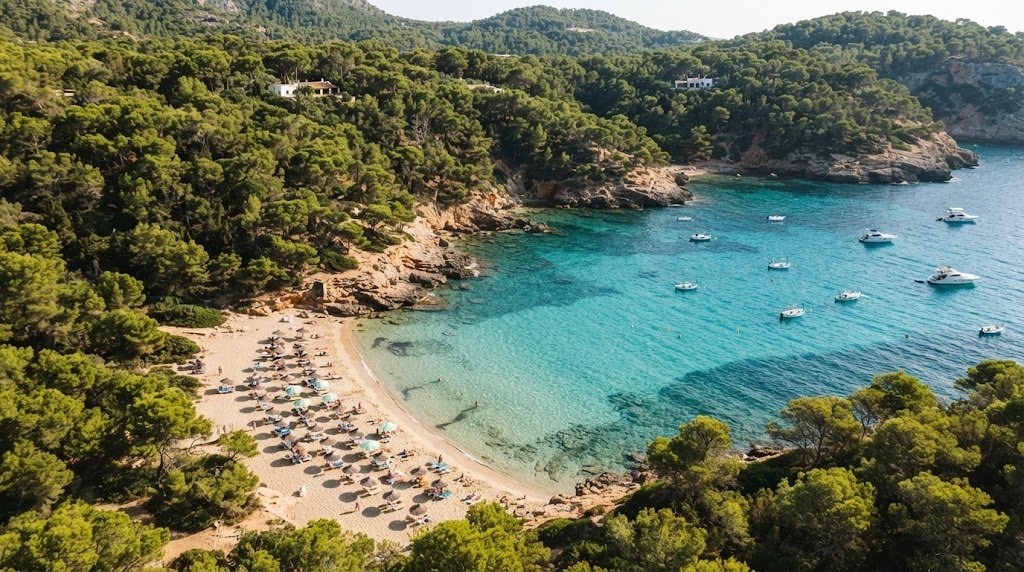
The Ses Salines Natural Park covers 3,000 hectares of salt pans, dunes and posidonia seagrass beds — itself a UNESCO listing — and has flamingos on the water in spring and autumn. Flat, easy walking on marked paths, and it connects the two southern beaches.
Sa Talaia, at 475 metres, is the island's high point. The walk up from Sant Josep takes about ninety minutes and gives you both coasts and Es Vedrà from the top. The coastal path from Cala d'Hort to Es Vedrà's viewpoints is shorter and more dramatic. In the north, the trail between Portinatx and Cala d'en Serra is the prettiest hour of walking on Ibiza.
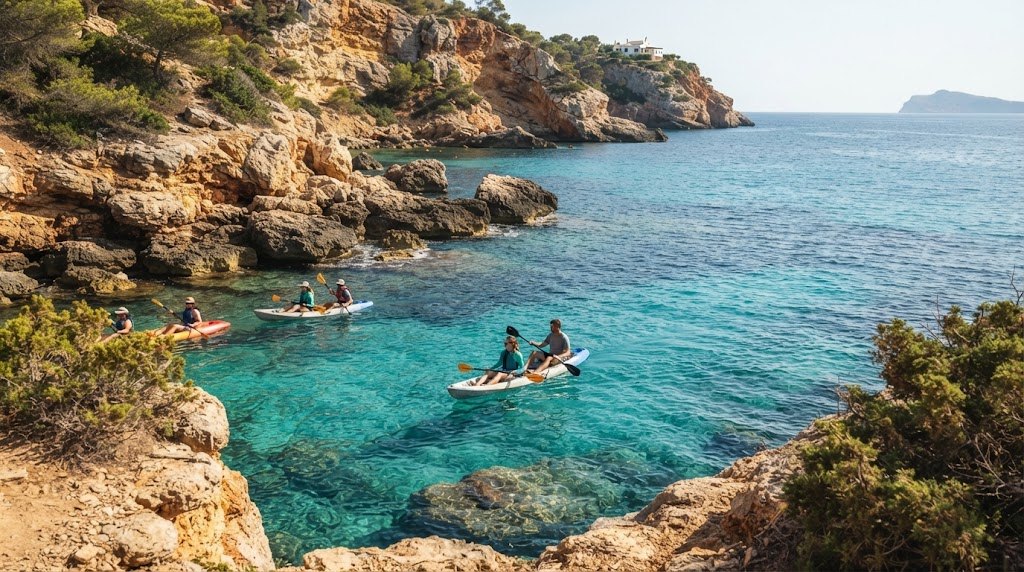
On the water: kayaking and paddleboarding are the island's most underrated activities. The north coast between Portinatx and Cala Xarraca has caves, arches and water clear enough to see the bottom at eight metres. Rentals run €15–25 an hour, and the wind gets up after midday almost every day, so go early.
The markets
Las Dalias at Sant Carles is the older and better of the two: Saturdays year-round, plus Monday and Tuesday night markets in summer, with actual craftspeople among the imported tie-dye. Punta Arabí at Es Canar, running Wednesdays since 1973, is the bigger and more commercial. Go to Las Dalias on a Saturday morning if you want to buy something you will still like at home; go to the Monday night market if you want the atmosphere.
Formentera and boat trips
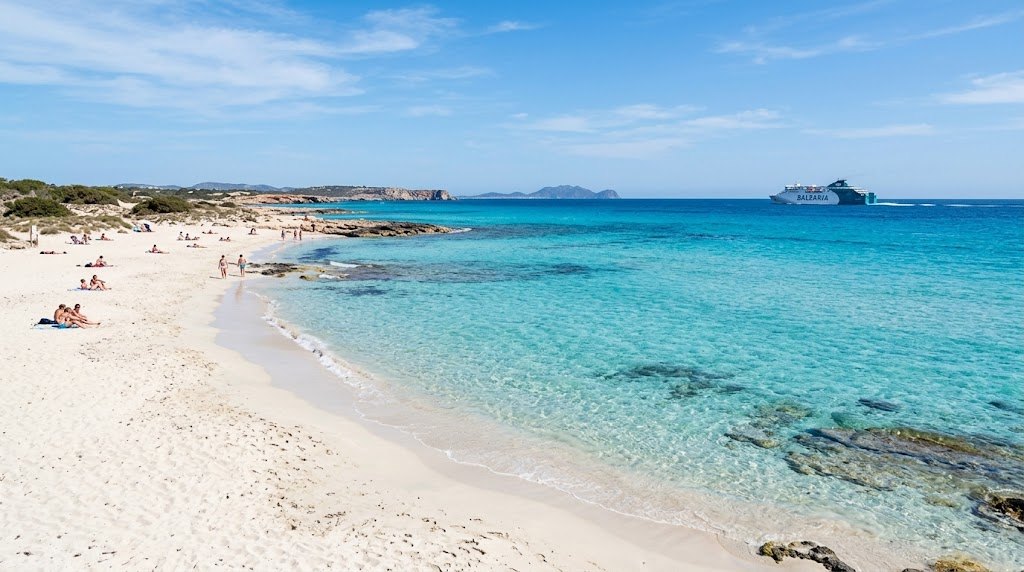
Formentera is thirty minutes away by fast ferry from Ibiza Town and looks like nowhere else in Europe — a low, flat sandbar of an island with water the colour of a swimming pool. It is the best day trip from Ibiza by a wide margin. Ferries run every half hour in summer, cost €45–60 return, and you should hire a scooter or a bicycle on arrival at La Savina rather than trying to walk anywhere.
Boat trips from Ibiza fall into three types: the Es Vedrà and Formentera full day (€55–75, the best value), the sunset cruise (€40–60, pleasant, brief), and the private charter (€600–2,000 a day, genuinely the best way to see the island if there are six of you splitting it).
When the weather turns
It rains here — mostly in October and November, occasionally hard. The indoor options are better than you would expect: the Museu Arqueològic in Dalt Vila, the Puig des Molins necropolis museum, the Museu d'Art Contemporani, the covered market and the galleries of the Plaça de Vila. Add a long lunch in Santa Gertrudis and a wet day passes perfectly well.
- Dalt Vila
- Free, open always. Museu Arqueològic €2.40.
- Puig des Molins necropolis
- €2.40, closed Mondays.
- Sa Caleta Phoenician site
- Free, open site, no facilities.
- Formentera fast ferry
- €45–60 return, 30 minutes, every 30 min in summer.
- Formentera scooter hire
- €25–40 per day from La Savina.
- Kayak or SUP rental
- €15–25 per hour, €45–70 per day.
- Group boat trip
- €55–75 for a full day with swim stops.
- Hippy market entry
- Free at Las Dalias; €3 at Punta Arabí.
What things cost
The island's daylight hours are much cheaper than its nights. Dalt Vila, Ses Salines, Sa Caleta and every walking trail are free. The two paid museums are €2.40 each. The genuine costs are the Formentera ferry (€45–60), a boat trip (€55–75) and car hire (€35–90 a day in season). A couple can fill five days for well under €200 between them, excluding food.
Honestly overrated
The Atlantis hike. Every year people are rescued off that descent. There is no beach at the bottom and the scramble back up in 35°C heat is genuinely dangerous. Skip it.
The Sant Antoni sunset strip. Historically important, now a crowded pavement with a €14 cocktail and a sound system. The sunset is better from any west-coast cala. Hippy market shopping at Punta Arabí, if you want island crafts rather than imported wholesale — go to Forada or Las Dalias instead. And the water park, which is fine, but you have come to an island with the clearest water in the western Mediterranean.
Frequently asked
- What is there to do in Ibiza besides clubbing?
- A great deal. Dalt Vila is a UNESCO World Heritage site and one of the best-preserved coastal fortresses in the Mediterranean. There is a 3,000-hectare nature reserve at Ses Salines, two long-running hippy markets, some of the clearest kayaking water in Spain, a Phoenician settlement at Sa Caleta, and a network of walking trails that are genuinely pleasant between October and May.
- Is Dalt Vila worth visiting?
- Yes, without qualification, and it is free. Enter by the Portal de ses Taules drawbridge, climb through the Renaissance ramparts to the cathedral, and walk the walls at the top for the harbour view. Allow two hours. Go at 18:00 rather than midday — the stone holds heat and the light is far better.
- How many days do you need in Ibiza?
- Four to five days covers the island properly: two coastal days, one for Dalt Vila and Ibiza Town, one for Formentera, and one spare for weather or a slow morning. Three works if you are disciplined. A week lets you add the north coast and a day doing nothing, which is the point of the place.
- Can you visit Ibiza without a car?
- Yes, if you base yourself in Ibiza Town, Sant Antoni or Santa Eulària. The bus network between the towns and the main beaches is cheap, frequent in summer and reliable. What you lose is the north coast and the interior villages, which is a real loss — consider hiring a car for two days of a week rather than all seven.
- What is the best free thing to do in Ibiza?
- Walk the walls of Dalt Vila at sunset, then come down through the old town. Second: the ridge walk on Sa Talaia, the island's highest point at 475m, which gives you both coasts and Es Vedrà in one view. Third: the Sunday drumming at Benirràs, which costs nothing but parking patience.
- Are there Roman or Phoenician ruins in Ibiza?
- Phoenician, yes. Sa Caleta, on the south coast, is the original 654 BC settlement and part of the island's UNESCO listing; it is an open site with interpretation boards and free to visit. The Puig des Molins necropolis in Ibiza Town holds more than 3,000 Punic tombs and has a small, excellent museum attached.
Book it
Dalt Vila guided walking tour
Two hours through the Renaissance walls with a licensed guide. Worth it for the history you cannot read off the interpretation boards, though the walk is entirely doable alone with our route guide.
Affiliate links. Prices last checked August 2026.
Who's playing, what it costs, where to go after
One email a week with the line-ups, the parties worth the money and the ones to avoid. No listicles, no spam, one-click unsubscribe.
Four deeper guides to the island's daylight hours
A walking route through the old town, the two markets explained, the Formentera day trip, and paddling the coast.